Planning a new build or remodel on Lake Minnetonka in Orono? You are not alone if the rules feel complex. Between lake, city, county, and state oversight, even small changes can trigger permits or design tweaks. This guide breaks down the essentials so you can make smart decisions, avoid surprises, and protect long-term value. Let’s dive in.
What “shoreland” means in Orono
In Minnesota, shoreland generally means land within 1,000 feet of the ordinary high-water level of a lake. On Lake Minnetonka, that definition puts most lakefront and many near-lake parcels inside a special management zone. If you plan work on a property in Orono, expect shoreland standards to guide setbacks, vegetation rules, and stormwater design.
The ordinary high-water level, or OHWL, is the reference line used to measure many setbacks and permit triggers. If your site plan depends on a precise distance, a surveyor or DNR staff can establish the OHWL for your application.
Who regulates what
State of Minnesota
The Minnesota Department of Natural Resources sets the baseline shoreland framework and issues Public Waters Work Permits for certain projects in, on, or over public waters. DNR definitions and the OHWL are key to understanding your site limits.
City of Orono
Within city limits, Orono controls local zoning, shoreland overlay standards, setbacks, and building permits. City rules can be more restrictive than state minimums. Orono’s planning and zoning staff are your primary contact for exact setbacks, lot coverage rules, and local permits.
Lake Minnetonka Conservation District
The LMCD regulates docks, mooring, boathouses, and many over-water structures on Lake Minnetonka. It sets lakewide standards for dock configuration, length, and the number of watercraft moored by shoreline frontage. If you are changing a dock or considering a boathouse, plan to engage with the LMCD early.
Hennepin County and other agencies
Hennepin County administers shoreland, bluffland, and stormwater requirements in some cases and provides guidance to cities. The Minnesota Department of Health oversees septic system standards. The MPCA and BWSR offer best-practice guidance for stormwater and shoreline conservation. Your project may touch more than one agency, so start conversations early.
Setbacks and OHWL basics
Setbacks are measured from the OHWL and from features like bluff lines. These distances determine where you can place a house, addition, garage, or patio. In some bluff-impact zones, added restrictions can limit grading or new structures. If you need to build closer than the standard setback, a variance may be required.
Check your setbacks
Confirm your parcel’s zoning, whether a bluff overlay applies, and how the OHWL is documented. When setbacks are tight, an OHWL survey and a current site plan can prevent costly redesigns.
Bluff and impact zones
Steep slopes and bluffs are subject to their own protections. If your site includes a bluff or significant slope, expect additional setbacks, limited grading, and an emphasis on erosion control.
Impervious surface and runoff
Impervious surfaces include roofs, driveways, patios, and sometimes compacted gravel. Shoreland rules often cap impervious coverage or require mitigation if you exceed thresholds. The goal is to reduce runoff that can carry sediment and nutrients into the lake.
Practical options include permeable pavers, pervious asphalt, and green stormwater practices such as rain gardens and infiltration trenches. Keeping hard surfaces farther from the shoreline can make approvals easier and protect water quality.
Vegetation and shore impact zones
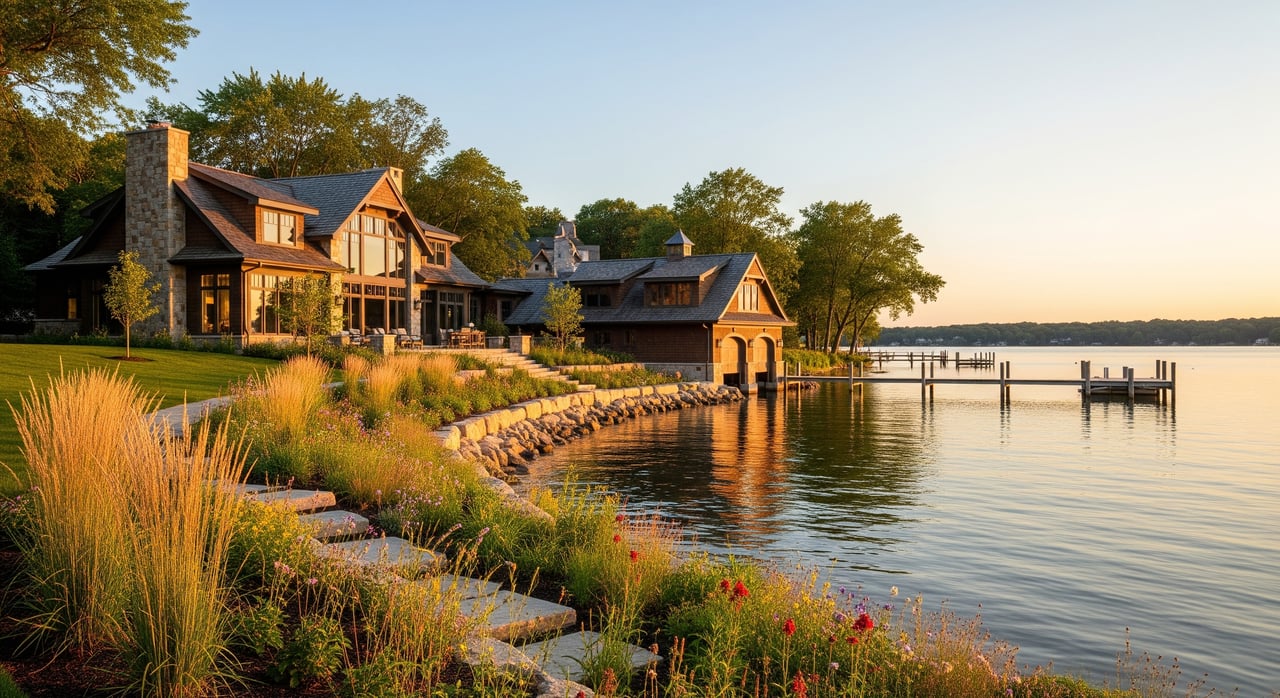
A native vegetation buffer between your home and the lake helps stabilize soil, filter runoff, and support habitat. Many ordinances define a shore impact zone where vegetation removal is limited. Activities like tree removal, clearing understory, or creating steep access paths can trigger review.
If you intend to improve views or access, plan to pair selective clearing with native plantings and stabilized paths. Review of a simple planting plan can go a long way toward approval.
Docks and shore structures
On Lake Minnetonka, most dock, mooring, and over-water questions lead to LMCD rules. City and DNR approvals may also be required, depending on your structure and whether it is attached to the lakebed.
Dock types and permits
- Temporary, seasonal docks that are removable can be simpler to permit in some situations.
- Permanent docks, piles, platforms, or boathouses often require LMCD permits and may need a DNR Public Waters Work Permit.
- If you are buying, documented dock rights and any recorded easements are critical. Grandfathered docks can carry value, while undocumented structures can be costly to correct.
Boathouses and seawalls
Many municipalities discourage or limit new boathouses, and hard shoreline protection like concrete seawalls faces close scrutiny. Regulators increasingly prefer bioengineering and natural stabilization, which blend native plantings with softer materials to reduce erosion.
Grading, fill, and stabilization
Any fill or excavation near the shore can change drainage and affect public waters, so permits are common. When shoreline stabilization is needed, soft solutions like coir logs, anchored natural fiber, and native vegetation are frequently favored over new hard walls. If your site includes a bluff, expect even tighter controls and a focus on slope stability.
Septic systems and remodels
Minnesota’s septic standards are rigorous. Setbacks from wells, property lines, and the OHWL vary by system type and soils. Remodeling projects that add bedrooms often trigger septic evaluations or replacement. If you are planning an expansion, build septic feasibility into your design from the start.
A current septic compliance inspection is a smart early step, especially for older systems or when you plan to increase occupancy.
Permits and approvals you may need
- City of Orono zoning and building permits, including shoreland or shoreland alteration permits where applicable
- LMCD permits for docks, mooring, boathouses, or occupied structures over water
- DNR Public Waters Work Permit for work in, on, or over public waters, depending on the project
- Hennepin County environmental or stormwater review if county-administered standards apply
- Septic permits coordinated under Minnesota Department of Health standards
- Wetland or floodplain approvals if your project touches those features
Permit timing varies by agency. Build room in your schedule for pre-application consultations and review cycles.
What you will need to apply
- A scaled site plan showing property boundaries, the OHWL, existing and proposed structures, all impervious surfaces, slope or bluff lines, and dimensions
- An impervious surface calculation that identifies what is counted and how
- A vegetation or landscape plan if you will remove or replace plantings
- A survey or OHWL determination when setbacks are tight or disputed
- A septic compliance report or soil borings if you plan septic changes
- Plans and specifications for docks, shoreline work, stormwater practices, and structures
- Completed application forms, agency checklists, and fees
Variances and timelines
If strict application of the rules prevents reasonable use, a variance may be possible. City variance requests must show practical difficulty and minimal environmental impact. The LMCD has procedures for special exceptions on dock layouts. DNR variances are less common but can apply in constrained scenarios.
Expect reviews to take weeks to months, depending on complexity. A complete, well-documented submittal with mitigation measures can shorten the timeline and improve outcomes.
Smart steps before you buy or build
- Confirm that the parcel is within the shoreland zone and under LMCD jurisdiction
- Request copies of recorded easements, dock agreements, and past permits for docks, boathouses, seawalls, and landscape work
- Order a shoreline or OHWL survey if distances drive your design
- Get a septic inspection and document system type and age, especially if you plan to add bedrooms
- Ask Orono planning and the LMCD what approvals apply, and request a pre-application meeting when possible
Design moves that win approvals
- Minimize new impervious surface near the lake and direct runoff away from the shore
- Use permeable pavements and green stormwater solutions like rain gardens
- Preserve or restore a native buffer along the shoreline
- Favor removable or seasonal dock designs when allowed
- If a variance seems necessary, document site constraints and propose mitigation that reduces environmental impacts
Costs and negotiation tips
- Unpermitted docks, seawalls, or failing septic systems can lead to costly fixes, redesigns, or relocations
- Buyers should budget contingencies when shoreline improvements are undocumented
- Sellers can smooth transactions by gathering permits, surveys, and septic records up front
- Recorded dock rights and documented permits can increase confidence and protect value at closing
How the Steadman Team helps
On Lake Minnetonka, shoreland rules are manageable when you plan ahead. You get the best results when your real estate strategy, design team, and permitting path work together. The Steadman Team brings development-minded experience across lakeshore estates, custom sites, and new construction in Orono and the broader Lake Minnetonka corridor. We help you frame the opportunity, coordinate with your builder, and sequence approvals so you can move forward with clarity.
If you are evaluating a remodel, a tear-down, or a new build on the lake, let’s align your goals with a clear path to permits and resale value. Connect with the Steadman Team to request a private consultation and valuation.
FAQs
What is the shoreland zone on Lake Minnetonka?
- Shoreland generally includes land within 1,000 feet of the lake’s ordinary high-water level. This zone triggers special standards for setbacks, vegetation, and stormwater.
Who decides my setbacks in Orono?
- Setbacks are based on local zoning and the OHWL. Orono planning staff confirm local distances, and a surveyor or DNR staff can establish the OHWL when precision is needed.
Do I need permits to change a dock?
- Most dock changes on Lake Minnetonka fall under LMCD rules, with city and possibly DNR permits depending on design and whether it is attached to the lakebed.
How is impervious surface calculated?
- Agencies count roofs, driveways, patios, and sometimes compacted gravel. Methods vary, so include a clear calculation in your site plan and confirm the worksheet your reviewer expects.
Can I add a seawall for erosion?
- New hard walls are closely reviewed and often discouraged. Soft bioengineering methods with native plantings are commonly preferred and may speed approval.
Will a remodel trigger septic upgrades?
- Adding bedrooms or changing use can trigger septic evaluations or replacement. A current compliance inspection is a smart first step before design moves forward.
How long do approvals take on the lake?
- Timelines vary by agency and complexity. Plan for several weeks to a few months, and improve speed with complete plans, surveys, and proposed mitigation.