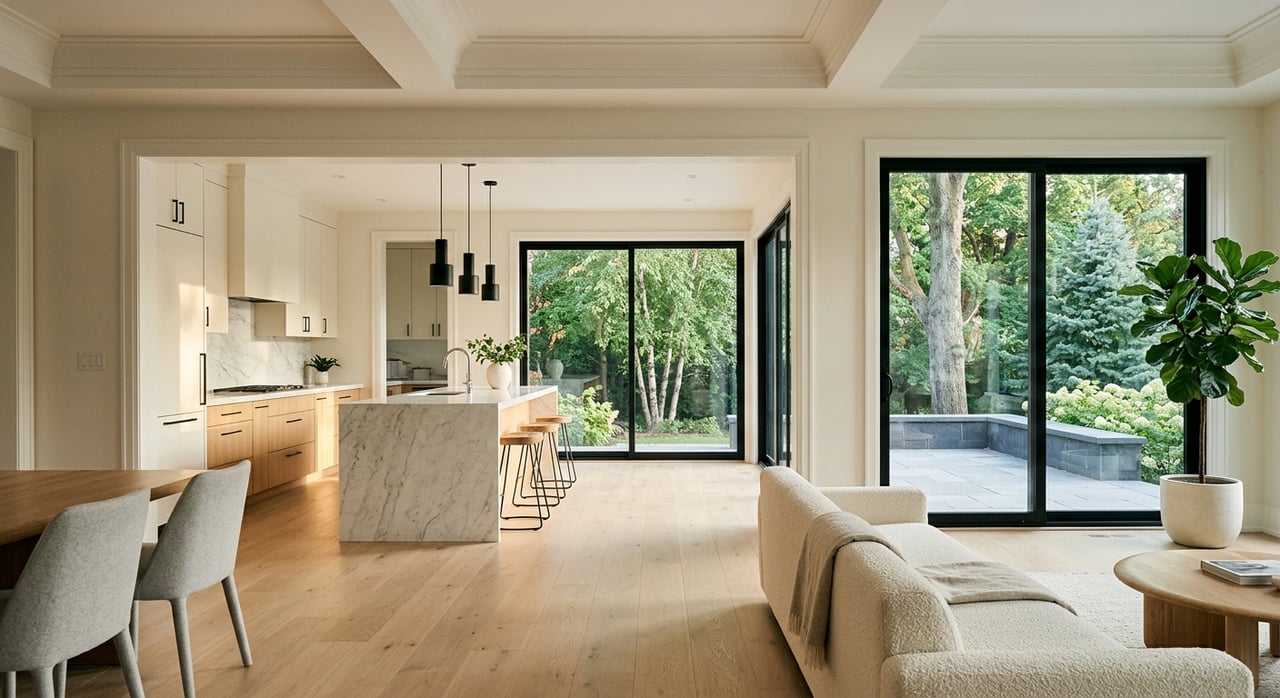
Trying to decide between building from scratch and buying a newer resale in Plymouth? It is a common fork in the road, especially if you want a home that feels current, fits your lifestyle, and makes the most of this part of the west metro. The right answer depends less on trends and more on how much customization, time, and process complexity you are comfortable with. Let’s break down what each path really looks like in Plymouth.
Why Plymouth changes the decision
Plymouth is not a blank-slate suburb with endless build-ready lots. The city’s planning work points to ongoing investment, reinvestment, and redevelopment, with added focus in areas such as City Center and the Highway 55/I-494 corridor.
For you, that means a custom-build search may involve more than browsing open land. In many cases, it can include infill opportunities, teardown candidates, or redevelopment-style sites where lot conditions and city review matter early.
What a custom build involves
A custom build gives you the most control. You can shape the floor plan, storage, finish level, and how the home sits on the lot to match how you actually live.
That flexibility comes with more moving parts. In Plymouth, new residential construction requires permits and must comply with the Minnesota State Building Code, along with local zoning standards for items like setbacks, yard coverage, and building height.
Site review comes first
Before you commit to a lot, you need to know whether the site works for your plans. Plymouth’s zoning rules can involve natural-feature considerations such as shoreland, wetlands, and floodplains, so a lot that looks promising online may have real design limits.
This is one reason lot choice matters so much in Plymouth. A site can affect not only what you build, but also how long approvals may take and what extra work may be needed before construction begins.
Plans and permits are layered
Plymouth requires a plot plan based on a current survey for new construction and additions, along with scaled construction drawings. Depending on the project, the city may also require plans prepared by an architect or engineer.
A custom build can also involve several permit categories beyond the main building permit. Depending on the site and scope, that may include mechanical, electrical, plumbing, sewer and water, grading, and right-of-way permits.
Grading and digging matter
If your project includes excavating, grading, stockpiling, or filling, Plymouth requires a grading permit. Excavators must also contact Gopher State One Call before digging.
That may sound procedural, but it affects budget, scheduling, and site feasibility. On some lots, grading and utility coordination are simple. On others, they become a meaningful part of the project.
Timelines are not one-size-fits-all
The city notes that some residential permits can be issued at application, while others can take up to five working days. Plymouth also advises applying early, especially during the summer construction season.
That does not include builder scheduling, material lead times, inspections, or weather. If you are considering a custom build, it helps to think of the process as a sequence that needs coordination, not a single start date.
Construction affects day-to-day life
Plymouth regulates construction hours through its noise ordinance. That matters if you are building in an established area where neighbors are close, or if you are managing expectations around a teardown or infill project.
For many buyers, this is not a deal breaker. It is simply part of understanding that custom building in Plymouth often happens within a mature community, not at the edge of brand-new development.
What a modern resale offers
A newer resale home offers a very different kind of value. Instead of starting with lot selection, surveys, permits, grading, and multiple inspections, you are evaluating a finished product that is ready for a more direct purchase timeline.
If your priority is simplicity, that difference is significant. You can focus on the home itself, its layout, condition, and location, without taking on the same level of pre-construction coordination.
Faster access to Plymouth living
One of the biggest advantages of a modern resale is timing. In many cases, you can move into Plymouth much sooner than you could through a ground-up build.
That can be appealing because Plymouth already offers an established lifestyle framework, including 68 developed parks, 1,834 acres of park land, and a 186-mile trail network. You are not waiting for the community to take shape. It is already here.
Established amenities are already in place
Resale buyers can also benefit from immediate access to civic and recreational destinations. Plymouth’s City Center area connects residents to places such as the Plymouth Ice Center, the library, City Hall, and trail connections leading to Medicine Lake and Parkers Lake.
If you value being settled quickly and enjoying the area right away, that convenience can carry real weight. You are choosing among homes in a city with mature infrastructure and established day-to-day amenities.
The tradeoff is flexibility
The main compromise with resale is that you are buying a home as it was built. Even in a newer or updated property, room flow, lot orientation, storage solutions, and finish selections may not match your exact wish list.
That does not make resale the lesser option. It simply means you are optimizing for certainty and speed rather than total control.
Custom build vs resale in Plymouth
The choice usually comes down to one core question: do you want to optimize for customization or certainty?
Here is a simple way to compare the two paths.
| Priority | Custom Build | Modern Resale |
|---|---|---|
| Layout control | High | Limited to existing plan |
| Lot selection importance | Very high | Moderate |
| Permit complexity | Higher | Lower |
| Timeline certainty | Lower | Higher |
| Move-in speed | Slower | Faster |
| Site-specific risk | Higher | Lower |
| Ability to personalize finishes | High | Limited unless you renovate |
When custom build makes sense
A custom build may be the better fit if you care most about long-term fit and precise design. That often includes buyers who want a specific room flow, a tailored site plan, or a home designed around how they entertain, work, or store seasonal gear.
In Plymouth, this path works best when you are ready for a more detailed process. Because site conditions, zoning, grading, and permit coordination can all affect the outcome, it is wise to evaluate those issues before you commit to a lot or teardown.
When modern resale makes sense
A modern resale may be the stronger fit if you want to be in Plymouth sooner or prefer more predictability. It can also be the right choice if you like the idea of a newer home but do not want to manage surveys, permits, and builder timing.
For many buyers, resale is the cleaner path. You can still find a current look and functional layout while reducing the number of variables between your search and your move.
A smart Plymouth checklist
If you are leaning toward a custom build, these are the practical items to confirm early:
- Verify that the site is buildable under current zoning
- Ask whether grading or right-of-way work will be needed
- Review whether natural features could affect design or approvals
- Confirm the builder’s Minnesota license
- Make sure the contract clearly covers scope, materials, price, payment schedule, timing, and change-order rules
Minnesota’s Department of Labor and Industry advises homeowners to verify a contractor’s license. The agency also recommends written contracts that clearly outline scope, materials, pricing, payment schedule, timelines, and written change orders.
Why early guidance matters
In Plymouth, the custom-build path is more site-sensitive and process-sensitive than many buyers expect. Bringing in the right real estate and builder guidance before you write on a lot can help you avoid expensive surprises later.
That is especially important in a city where redevelopment and reinvestment are active themes. An experienced, development-minded team can help you compare whether a site supports your goals or whether a newer resale would deliver better value with less friction.
If you are weighing a custom build against a modern resale in Plymouth, the best next step is a clear-eyed review of your timeline, design goals, and tolerance for process. The right choice is the one that fits how you want to live and how much complexity you want to take on. For a private conversation about lots, teardowns, new construction, or high-value resale opportunities in Plymouth, connect with the Steadman Team.
FAQs
What should you check before buying a lot in Plymouth for a custom home?
- Confirm the site is buildable under current zoning, review whether grading or right-of-way work is needed, and check for natural-feature constraints such as wetlands, floodplains, or shoreland rules.
How long do residential permits take in Plymouth?
- Plymouth says some residential permits can be issued at application, while others can take up to five working days, and the city recommends early submission during the summer construction season.
Why can building in Plymouth be more complex than buying resale?
- A custom build may involve surveys, plot plans, construction drawings, multiple permit types, inspections, and site-specific issues like grading or utility coordination, while resale usually avoids that sequence.
Is a newer resale home a good option in Plymouth if you want convenience?
- Yes. A newer resale can offer a simpler and faster move-in path while giving you immediate access to Plymouth’s parks, trails, City Center amenities, and established community infrastructure.
What should a Minnesota custom-home contract include?
- Minnesota DLI recommends a written contract that covers scope, materials, price, payment schedule, timelines, and written change-order terms.